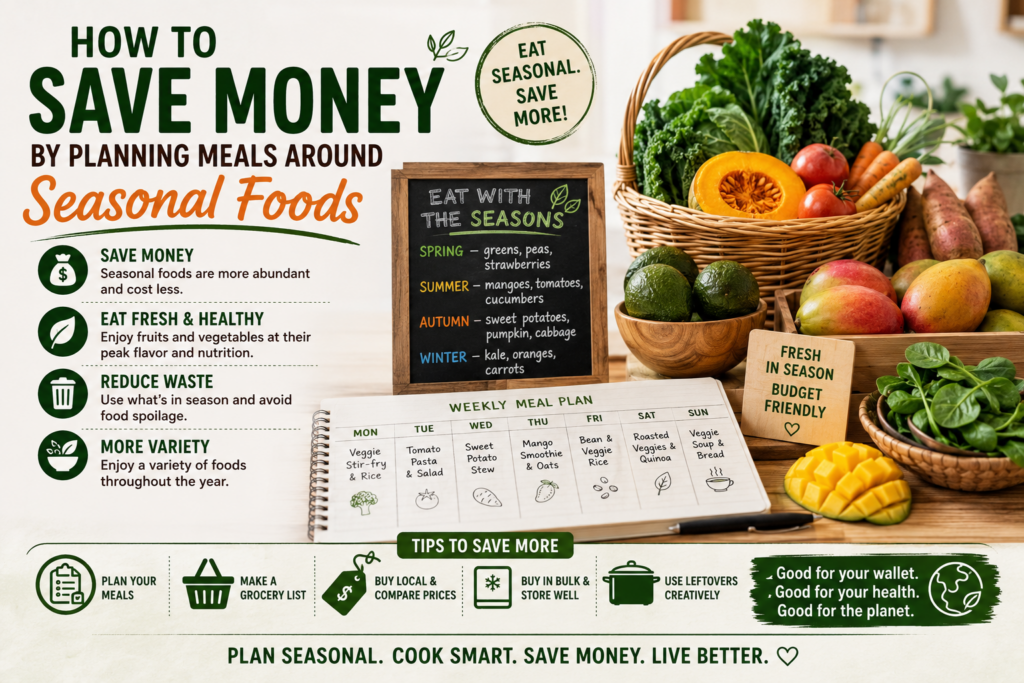
Food prices can take a big bite out of your monthly budget. One of the easiest ways to save money on groceries without sacrificing nutrition or flavor is to plan your meals around seasonal foods.
Seasonal foods are fruits and vegetables that are naturally harvested during a particular time of the year. Because they are abundant and readily available, they are usually cheaper, fresher, and more nutritious.
In this guide, you’ll learn how planning meals around seasonal foods can help you save money every month.
What Are Seasonal Foods?
Seasonal foods are produce items that are harvested during their natural growing season.
Examples include:
- Mangoes during mango season
- Sweet potatoes during harvest season
- Avocados when they are plentiful
- Leafy greens during cooler months
- Tomatoes during peak harvest periods
Buying foods when they are in season often means lower prices and better quality.
Benefits of Eating Seasonal Foods
1. Save Money on Groceries
Seasonal produce is usually less expensive because it is widely available.
When supply is high, prices often decrease, allowing you to buy more for less.
2. Enjoy Fresher and Tastier Food
Seasonal fruits and vegetables are harvested at the right time, making them fresher and more flavorful.
Fresh ingredients also improve the taste of your meals.
3. Reduce Food Waste
Fresh seasonal produce often lasts longer and can be incorporated into multiple meals throughout the week.
Planning meals around what is available helps prevent unnecessary purchases and food spoilage.
4. Eat a More Varied Diet
Seasonal eating encourages you to try different foods throughout the year, adding variety and nutrition to your meals.
How to Plan Meals Around Seasonal Foods
Step 1: Identify What’s in Season
Visit local markets, supermarkets, or farmers’ markets and observe which fruits and vegetables are abundant and affordable.
Take note of items that are selling at lower prices.
Step 2: Build Your Weekly Meal Plan
Choose two or three seasonal ingredients and plan meals around them.
For example:
Seasonal Tomatoes
- Tomato stew
- Fresh salads
- Pasta sauce
Seasonal Sweet Potatoes
- Sweet potato mash
- Sweet potato soup
- Roasted sweet potatoes
Step 3: Buy in Bulk When Prices Are Low
If seasonal produce is available at a great price, consider buying extra quantities.
You can:
- Freeze vegetables
- Dry fruits
- Prepare sauces and soups for future use
Buying in bulk during peak season can lead to significant savings.
Step 4: Use Every Ingredient
Avoid waste by using all edible parts whenever possible.
Examples:
- Vegetable peels for stock
- Overripe fruits for smoothies
- Leftover vegetables for soups and stir-fries
Seasonal Meal Ideas
Breakfast
- Sweet potato pancakes
- Fruit smoothies
- Vegetable omelettes
Lunch
- Fresh salads
- Vegetable rice bowls
- Bean and vegetable stew
Dinner
- Roasted seasonal vegetables
- Stir-fried vegetables with rice
- Vegetable soup with homemade bread
Additional Tips for Saving Money
- Always shop with a grocery list.
- Compare prices before buying.
- Check your pantry before shopping.
- Plan meals before visiting the market.
- Store fresh produce properly to extend shelf life.
Final Thoughts
Planning meals around seasonal foods is a simple yet powerful way to reduce grocery expenses, minimize food waste, and enjoy fresher meals.
By choosing ingredients that are naturally abundant and affordable, you can create delicious meals while staying within your budget.
The next time you go shopping, look for seasonal produce and let nature guide your meal planning.
Your wallet—and your family—will thank you.
Want More Money-Saving Meal Ideas?
👉 Get your copy today and start turning your everyday cooking into income. Click the link in my bio to get instant access.
Cook More. Waste Less. Save More.

